
In the fourth and final post of our 2026 Asset Management Challenges series, we’re tackling a challenge that becomes harder as firms grow, strategies expand, and reporting expectations increase: managing debt and equity investments.
For firms investing in both equity and debt, maintaining multiple software solutions is more expensive and time-consuming, it limits visibility across teams, and it makes it harder to understand performance.
TL;DR: Highlight video on how to manage both equity and debt in one software platform
Specific software for equity and debt adds cost and complexity
On the surface, using one system for equity and another for debt can seem reasonable. The asset types are different, the workflows are different, and the teams operate separately.
But in practice, multiple systems mean multiple vendors, multiple data models, multiple definitions, and multiple ways of referring to the same things. That becomes problematic because there are no universal standards in this industry for how investments should be modeled, structured, or even described. Every software provider has its own terminology, logic, and way of organizing information. As a result, even basic concepts can be defined differently from one system to another.
So what looks like a workable setup at first often leads to:
- Higher software costs
- More time spent translating information across teams
- Less visibility across debt and equity strategies
- More blind spots that can lead to slower or less informed decisions
Just as important, equity and debt teams benefit greatly from being able to share the same information, such as property performance, underwriting assumptions, market comps, and deal pipeline data.
Example use case
For example, a debt team may have underwritten several multifamily deals in a specific market and already captured real operating data from those assets – rents, taxes, insurance, and operating expenses. If the equity team is evaluating a new deal in that same market, those actuals are probably the most relevant comp they could use.
But if that information is buried in another platform, it isn’t helping anyone. Instead of creating leverage across the business, the firm ends up with blind spots and duplicated efforts.
Manage both debt and equity with one software platform
The answer isn’t to add more technology; it’s to manage debt and equity in one software platform, with shared workflows, definitions, and reporting logic.
When firms bring both strategies into a single operating environment, they create a more connected foundation across the investment lifecycle for both asset classes.
Watch Jeff Wilson, CEO and Founder of Pereview, explain how to make this a reality in your business

How Pereview helps
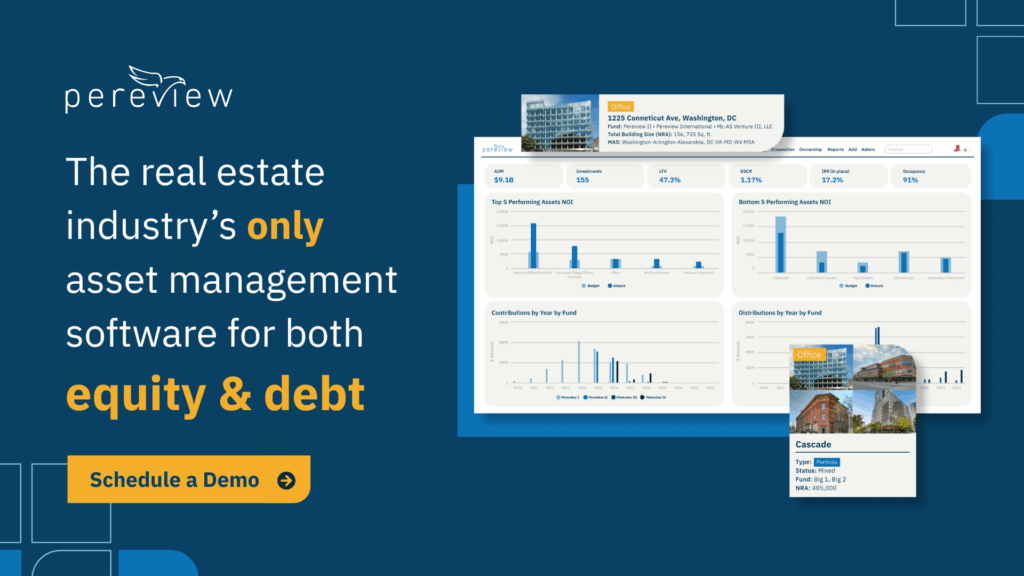
Rather than forcing teams into separate tools and disconnected processes, Pereview provides a single software platform built on a unified database providing both debt and equity teams with the ability to perform advanced analytics and run routine and ad hoc reports utilizing data from both transaction types.
Pereview supports debt in two important ways:
- The software stores all data associated with debt financing so firms can manage loan details, dates, terms, covenants, contacts, and related financing information for equity investments allowing for quick and easy analysis and reporting.
- Pereview Enterprise also supports debt as an asset itself, allowing firms to manage credit strategies like common equity, preferred equity, mezzanine debt, and senior debt.
The value of managing both Debt and Equity with one software
Because debt and equity are in the same platform, teams can:
- Move directly from the loan to the underlying asset or collateral with one click and see how that investment is actually performing with operational and financial data submitted by the borrower. That visibility into the collateral is essential, especially for mitigating risk and making better informed decisions.
- Manage multiple strategies in one environment instead of attempting to build integrations between an equity deal tracker, a loan pipeline system, a loan asset management tool, and a portfolio reporting system from different vendors. Once firms start trying to do this, they often find themselves building a custom data warehouse, hiring developers, managing APIs, and essentially becoming a software company whether they want to or not.
That is the value of managing debt and equity on one platform: lower complexity, better visibility, and a more connected investment team.