
In the second blog in our 2026 Asset Manager Challenges series, we’re diving into a challenge that becomes more difficult as portfolios grow and reporting demands increase: critical data is spread across too many systems, files, and third parties.
Real estate asset management teams don’t normally have a lack of data. The challenge is that the information they use to manage the portfolio is scattered across third-party property managers, operating partners, source systems like Yardi, MRI, or RealPage OneSite, multiple Excel models, and separate financing records.
Add in lease expirations, downtime, leasing pipeline activity, investment performance, and, when relevant, capital projects or promote structures, and it becomes difficult to maintain a clear, current view of asset and portfolio performance.
It’s a lot of data, and when it’s distributed across systems, teams, and third parties, getting portfolio-level clarity becomes a manual exercise – downloading, wrangling, and updating information just to understand what’s true right now – especially when numbers do not tie out due to undocumented prior period adjustments, forcing teams to spend valuable time researching variances rather than focusing on optimization.
“Our goal with Pereview is to consolidate all that data for us so that we can better track, review, understand, and just have a better handle on reporting and financials.”
Asset manager, Midwest-based firm
Watch the summary video here:
Manually gathering and validating data this way creates real friction where it matters most:
- Portfolio visibility isn’t “on demand” – data has to be manually collected and updated each cycle
- Conversations slow down because people aren’t looking at the same information or the same version
- Risk gets harder to spot early because indicators are buried across different sources, prior period adjustments show up late, and variances surface after the fact
- Decisions take longer because the team is busy assembling context instead of acting on it – and by the time you’re aligned, the window to respond has moved
When all your investment data is in one place, decisions get easier
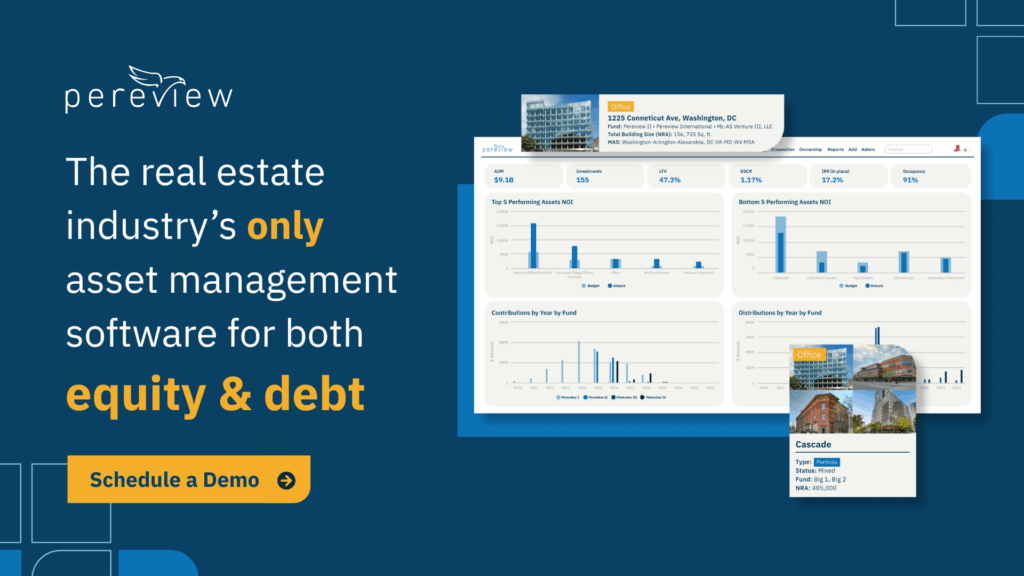
The firms with the most actionable business intelligence are often those that transform manual data consolidation and standardization into a single source of truth that powers instantly updated asset-level reports, portfolio insights, and business-wide dashboards.
Business outcomes that firms that adopt this approach realize include:
- Centralizing asset-level data (actuals, rent roll data, underwriting assumptions, debt terms, leasing activity) in one connected structure
- Standardizing the math and definitions such as NOI, carry value, invested equity, assets under management, equity under management, and other metrics so everything aligns across assets and managers (same definitions, same mapping, same rollups)
- Making portfolio-level views something you can access and trust, rather than rebuilding each cycle
When the data is organized this way, creating reports on portfolio performance stops being a special project. It becomes the default, making it easier to walk into an Investor Committee meeting prepared, be able to answer Founder and CFO questions quickly, spot issues causing variances, exposure to covenant pressure, lease rollover exposure, and make faster, more informed decisions.

Where Pereview’s asset management software fits
This is the gap Pereview Enterprise is designed to fill by bringing together all your asset and portfolio data across systems, teams, and third parties into one place so your team isn’t spending hours and days on low-value administrative tasks.
Pereview clients realize specific business outcomes like:
- More complete view of asset performance with centralized and standardized actuals and operating data from PMCs and operating partners
- More accurate reporting and less manual reconciliation by connecting accounting and financial systems
- Better visibility into performance against the business plan by aligning underwriting and portfolio Excel models with live asset data
- Stronger risk management by incorporating debt details like loan terms, covenants, maturities, and rate mechanics into asset analysis
- Faster, more informed decisions by adding leasing and asset-level context that explains what is driving performance
The goal is simple: bring those inputs into one place, standardize them, and make them usable at the asset and portfolio level so teams can stop translating between sources, managing prior period adjustments, and defending numbers – and spend more time prioritizing issues, escalating risks, and improving portfolio performance and NOI.